NYC Used Cooking Oil Disposal Regulations: What Every Restaurant Needs to Know

If you run a restaurant, commissary, or commercial kitchen in New York City, used cooking oil compliance is not optional, and it is not something you can afford to figure out after the fact. The city and state have a layered set of regulations that govern how your used cooking oil must be stored, who is allowed to transport it, and what documentation you need to prove you're doing it right. Fines for violations can reach $10,000, and inspectors do show up unannounced.
We've been collecting and recycling used cooking oil across Manhattan, Brooklyn, and Queens for over 15 years, and compliance questions are some of the most common things we hear from restaurant operators, especially new ones. In this guide, we want to walk you through the actual regulatory framework, what it means practically for your kitchen, and what you need to have in place to stay fully protected. This is not legal advice, but practical knowledge from people who work inside this system every day.
Why NYC Has Some of the Strictest UCO Rules in the Country
New York City's density creates problems at scale that simply don't exist in smaller markets. When tens of thousands of commercial kitchens are all managing grease and cooking oil within a tightly packed sewer and street grid, improper disposal compounds fast. The city loses millions of dollars each year responding to sewer blockages caused by fats, oils, and grease, a category regulators call FOG. These blockages form what are widely known as "fatbergs," massive congealed masses that harden inside pipes and can cause cascading failures across entire city blocks.
Beyond infrastructure damage, improperly disposed cooking oil reaches waterways, creates fire hazards when stored incorrectly, and has historically attracted organized theft due to its commodity value as a biodiesel feedstock. The regulatory framework that's developed around used cooking oil in NYC is a response to all of these real, documented problems. Understanding the rules is a lot easier when you understand the problems they were designed to solve.
The regulations come from multiple agencies operating at the city and state level, and each has jurisdiction over a different piece of the puzzle. What eventually becomes of your recycled cooking oil is actually quite reusable, which makes proper handling even more worth getting right from the start.
The Three Regulatory Bodies
Most restaurant operators are surprised to learn that used cooking oil compliance in New York City involves not one, two but three distinct regulatory agencies. Each covers a different aspect of the process, and a violation with any one of them can create serious problems for your business.
The NYC Department of Environmental Protection (DEP) is the agency most operators encounter first. The DEP enforces sewer use regulations and FOG management requirements for all food service establishments. Its mandate is direct: you are required to properly manage and dispose of all cooking oil and grease generated at your facility, and you cannot allow FOG to enter the city's sewer system. Inspectors have the authority to visit your establishment without prior notice, review your disposal records, and issue fines of up to $10,000 per violation. They are actively looking at whether you have a functioning grease trap, whether your used cooking oil is stored correctly, and whether you can show proof that a licensed hauler is removing it on a documented schedule.
The NYC Business Integrity Commission (BIC) governs the companies that transport used cooking oil, not the restaurants themselves. Any hauler removing used cooking oil from your premises in New York City must hold a valid BIC Trade Waste License. This license requires a background investigation, ongoing compliance reporting, and renewal. If you are currently working with a collection company, or if someone approaches you offering to collect your oil, verifying their BIC license is not just a good idea, it is your protection. If an unlicensed hauler removes your oil and something goes wrong, the liability can fall back on you. Our BIC license number is TW3525, and we're happy to provide it to any establishment we serve. We were one of the first and remain one of the few to have all proper paperwork in the eyes of New York City.
The NYS Department of Environmental Conservation (DEC) operates at the state level and governs the transportation of used cooking oil under its Part 364 waste transporter permit requirements. Used cooking oil and yellow grease are classified as "waste oil" for the purposes of these transport regulations, which means any hauler moving significant volumes must hold a valid DEC permit in addition to their BIC license. Our DEC Permit number is 1A-1149. The layering of BIC and DEC requirements is part of what makes New York's regulatory environment stricter than most states, and it's also what makes working with a properly credentialed hauler so important.
Storage Requirements: What You Need On-Site
How you store your used cooking oil between pickups is one of the most common sources of compliance violations, and it's also one of the most controllable. New York regulations are specific about what is and isn't acceptable, and meeting these standards is entirely achievable with the right setup.
Your used cooking oil must be stored in sealed, structurally sound containers that are clearly identified and kept separate from all other waste streams, including regular trash, recycling, and grease trap waste. Open containers, leaking tanks, or oil pooled on the ground are immediate red flags during inspections. Containers must be stored in a location that is accessible to service vehicles, which generally means there needs to be adequate clearance for a collection truck to operate safely.
New York regulations specify that unprocessed used oil or grease cannot be stored on-site for more than 30 days. This rule exists to prevent degradation, spill risk, and pest attraction, and it also creates a practical mandate for regular scheduled pickups. For high-volume operations like hotel kitchens, hospital cafeterias, or busy commissaries, 30 days is rarely an issue since volume drives more frequent service naturally. For smaller restaurants, it's worth confirming that your pickup schedule is actually meeting this threshold. Knowing how frequently your kitchen should be scheduling oil pickups depends on your volume and fryer usage, and it's a question we're always happy to help you think through.
One additional storage consideration specific to NYC is grease theft! Strange as it may seem, theft from outdoor containers is a documented and ongoing problem across the five boroughs. Queens and Brooklyn in particular have seen recurring incidents. A stolen container of oil leaves you without disposal documentation for that period, which creates a compliance gap if an inspector asks about it. Containers should be secured, located in areas with some visibility, and matched to a hauler you trust and recognize on sight.
Grease Traps: The Other Half of FOG Compliance
Used cooking oil from fryers and collection containers is only one part of your FOG obligation. The other is grease trap maintenance, and the DEP takes both seriously. If you run a food service establishment in New York City that generates fats, oils, or grease as part of normal kitchen operations, you are required to have a functioning grease interceptor installed and maintained.
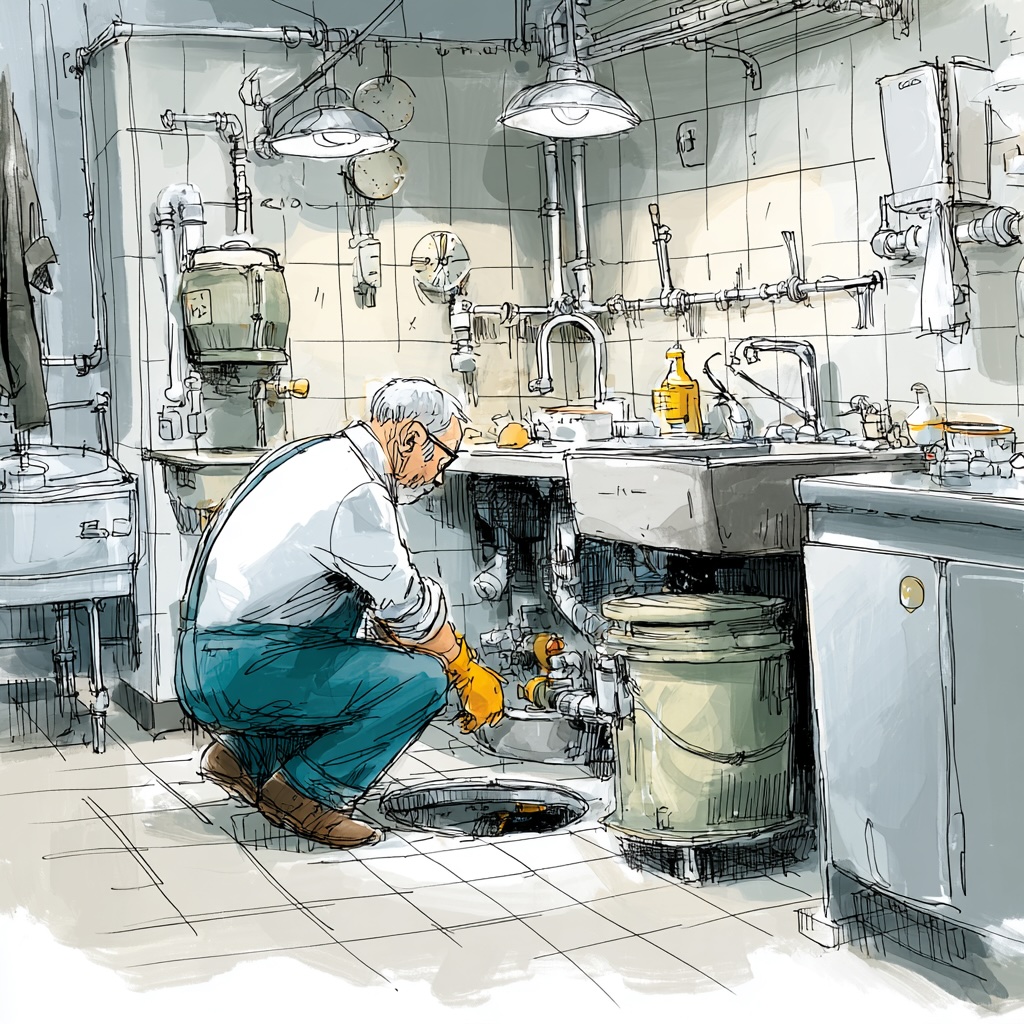
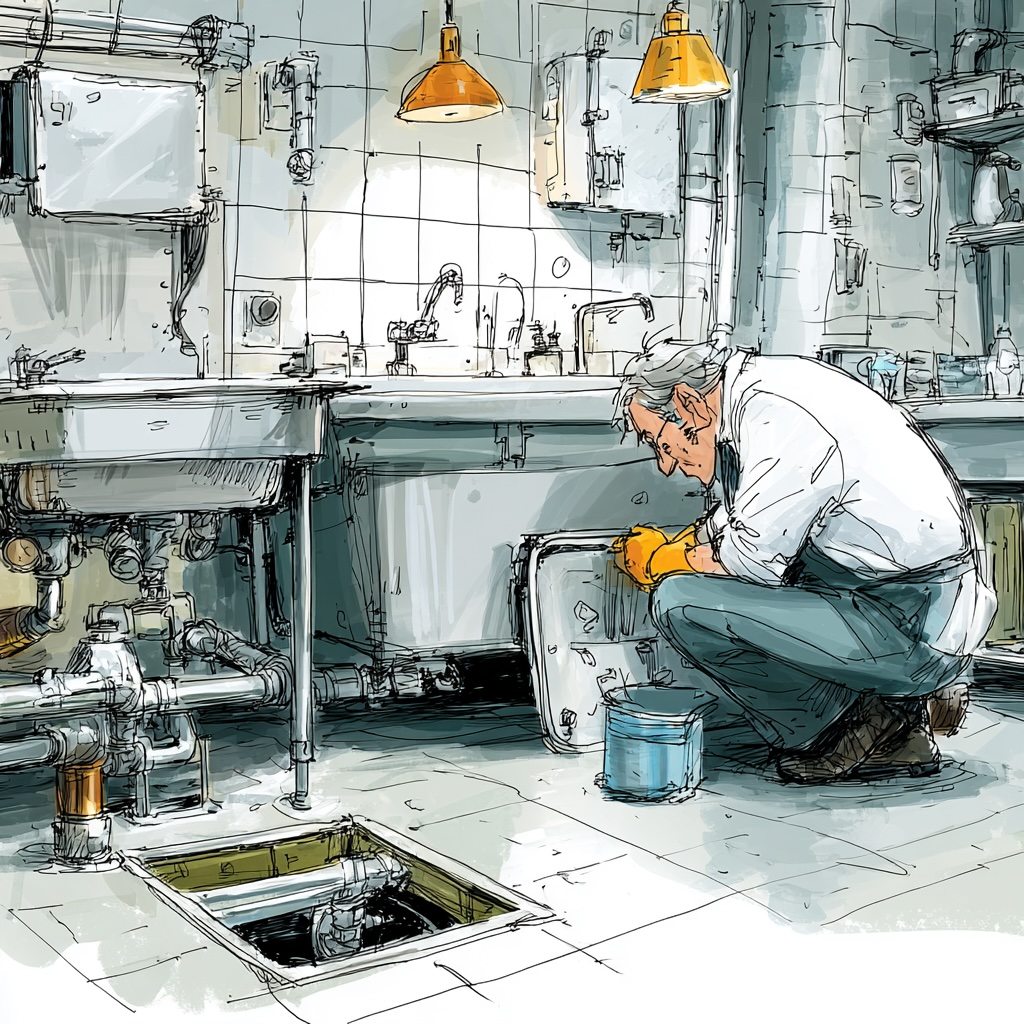
Grease traps work by intercepting FOG from wastewater before it enters the municipal sewer. Wastewater from sinks, dishwashers, and floor drains flows into the trap, where grease rises and collects at the top while relatively clean water exits through an outlet pipe. Over time, the trap fills with accumulated grease and solids. When it's not pumped regularly, the trap overflows into the sewer, or worse, backs up into your kitchen.
The DEP requires, a cleaning frequency based on your kitchen's volume and trap capacity. The general industry standard for most NYC restaurants runs from monthly to quarterly, but high-volume operations often need more frequent service. Understanding what a grease trap does and how to stay compliant is worth the time for any operator who hasn't reviewed this recently. Records of grease trap cleanings must be kept on-premises alongside your used cooking oil disposal receipts, because inspectors typically review both during a compliance visit.
Documentation: The Proof That Protects You
This is the piece of the compliance picture that operators most often underestimate. It is not enough to simply be using a licensed hauler and proper containers. You must be able to prove it, on demand, during a DEP inspection.
The documentation you're required to maintain includes pickup receipts or manifests for every used cooking oil collection, showing the date, volume collected, hauler name, and hauler license information. These records should be kept on-premises and organized so that any staff member can retrieve them quickly during an inspection. A documentation gap for a specific time period, even if the oil was legitimately collected, can be treated as a potential violation.
Reputable haulers provide this documentation automatically. Every pickup we perform generates a receipt that establishes a clear chain of custody from your kitchen to the recycling facility. We provide these records to our clients after each collection, and we encourage everyone to keep a running compliance folder. If you've been working with a collector who isn't consistently providing this paperwork, that's a problem worth addressing before an inspection surfaces it.
Local Law 146 adds an additional layer for larger food service establishments in NYC. This law requires covered businesses to divert organics, including fryer oil, away from the general trash stream and to maintain annual tonnage records for the Department of Sanitation. The specific thresholds that trigger LL146 obligations have expanded over the years, so if your operation is on the larger side, it's worth confirming your current obligations directly with your hauler or a compliance advisor.
What Happens If You're Not Compliant
Inspections are real, fines are real, and the consequences compound quickly when multiple violations are found at once. The DEP has authority to issue penalties up to $10,000 per violation, and violations for improper storage, unlicensed haulers, missing documentation, and sewer discharge can each be cited as separate items during a single inspection.
Beyond fines, persistent compliance failures can surface during health department inspections, which occur on a separate track but often review the same physical conditions. A kitchen with pooled oil, an overflowing grease trap, or an unlocked outdoor container is creating problems that extend beyond the DEP's jurisdiction. And for businesses applying for permits, renewing licenses, or seeking financing, a history of environmental violations is a real liability.
The good news is that compliance is genuinely not complicated when you have the right systems in place. Getting your restaurant's cooking oil storage set up correctly from the beginning saves significant time and money compared to getting fined and then having to rebuild your program.
Conclusion: Compliance Is Simpler Than It Looks
NYC's used cooking oil regulations have real teeth, but they're also designed around a clear and achievable standard: store your oil properly, work with a licensed hauler, maintain your grease trap, and keep your paperwork. That's the framework. The complexity comes from understanding which agencies are involved and what each one requires, and that's exactly the knowledge gap this article hoped to close.
At Bio Energy NYC, compliance isn't an afterthought. We're fully licensed by both the BIC and the NYS DEC, and every pickup we perform comes with the documentation your business needs to stay inspection-ready. If you're ready to get set up with a reliable collection program, explore our used cooking oil disposal service, our grease trap cleaning program, or our services for NYC restaurants. When you're ready to get started, contact us or request your free pickup today. We'll take care of the rest.
Bio Energy Development is a BIC-licensed, DEC-permitted used cooking oil collection and grease trap cleaning company serving Manhattan, Brooklyn, and Queens. BIC Lic. #TW3525 | DEC Permit #1A-1149 | EPA ID #NYR000170753.