Grease Trap vs Grease Interceptor: What NYC Restaurants Need to Know
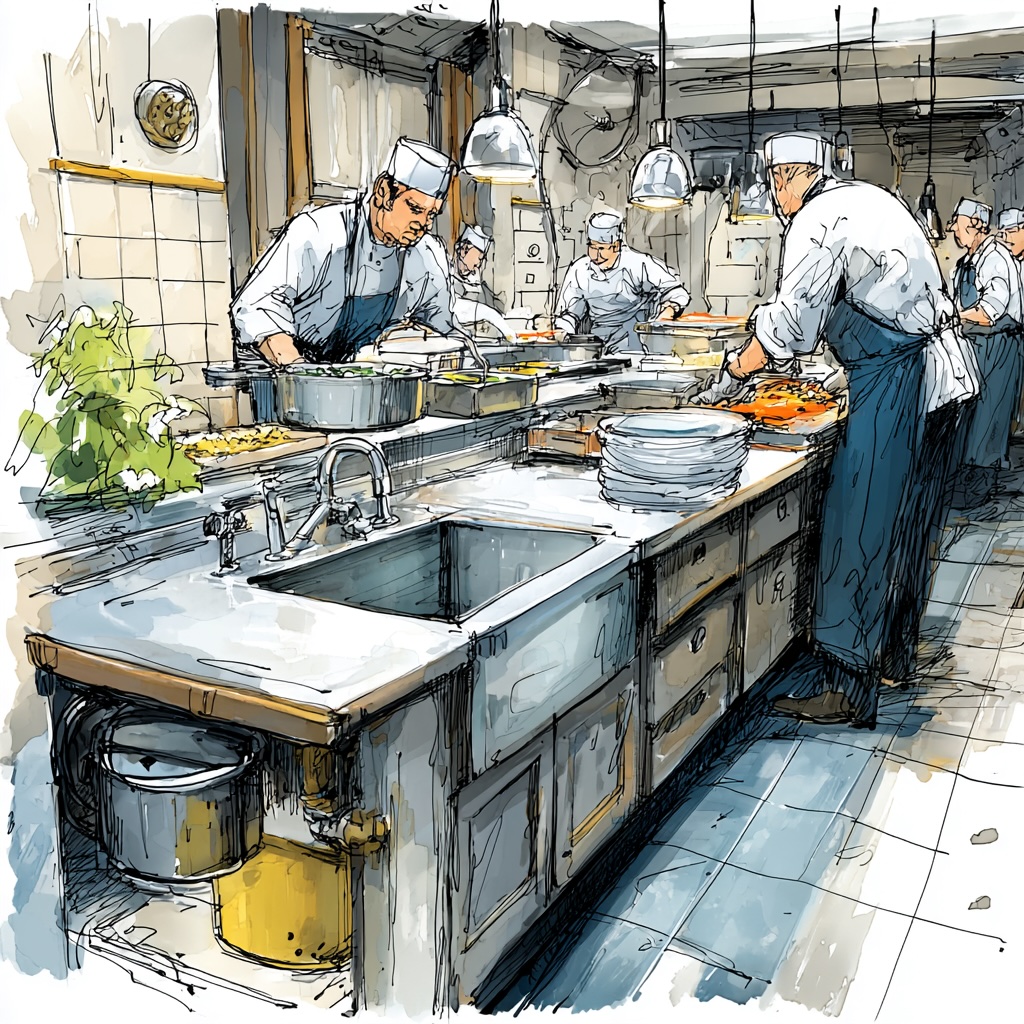
In New York City, where kitchens range from compact neighborhood counters to multi-floor hotel banquet operations, understanding which system applies to your operation is not just a technical question. It is a compliance question with real enforcement behind it. This article gives you a clear side-by-side explanation of each system, what distinguishes them, and how to understand which applies to your operation.
Both grease traps and grease interceptors solve the same problem: they prevent fats, oils, and grease (FOG) from entering the municipal sewer system, where they solidify, accumulate, and cause the kind of blockages that cost New York City millions of dollars each year to remediate. Left unmanaged, FOG entering the sewer combines with other organic material to form dense masses that can shut down entire sewer lines. The DEP has documented that a significant share of the city's sewer overflows are grease-related.
The physical principle behind both devices is identical. FOG is less dense than water, so when wastewater slows down inside a chamber, the grease rises to form a floating layer at the top, food solids sink to the bottom, and the relatively clean water in between exits through an outlet pipe. The separation works the same way in a compact under-sink unit as it does in a 2,000-gallon underground tank. What changes between the two is scale, capacity, placement, and the volume of wastewater the device is designed to handle.
New York City's Plumbing Code and DEP Best Management Practices require grease interceptors or automatic grease removal devices in all food service establishments that generate FOG through cooking, dishwashing, or food preparation. Knowing what the regulations require of your kitchen from a compliance standpoint is the foundation for making the right system decision, because the wrong choice creates both operational and enforcement problems.
Grease Traps
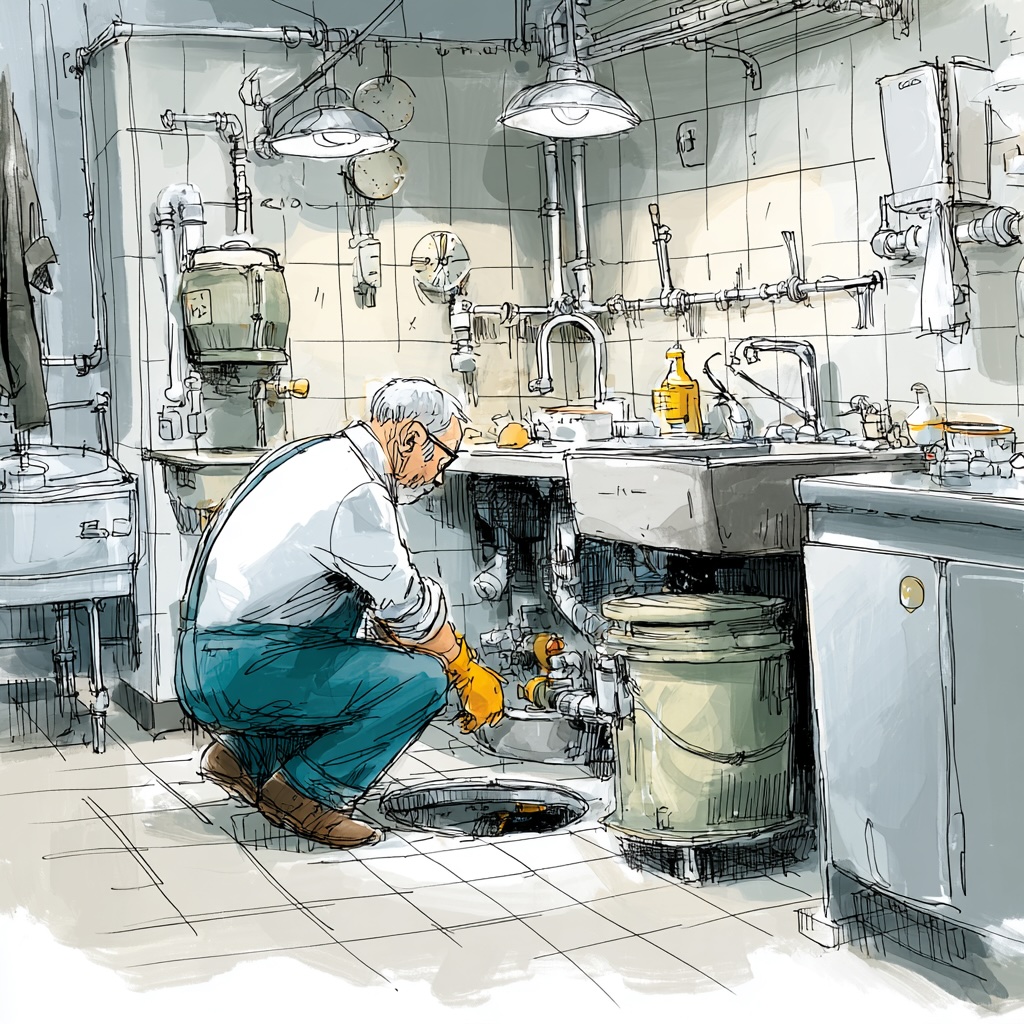
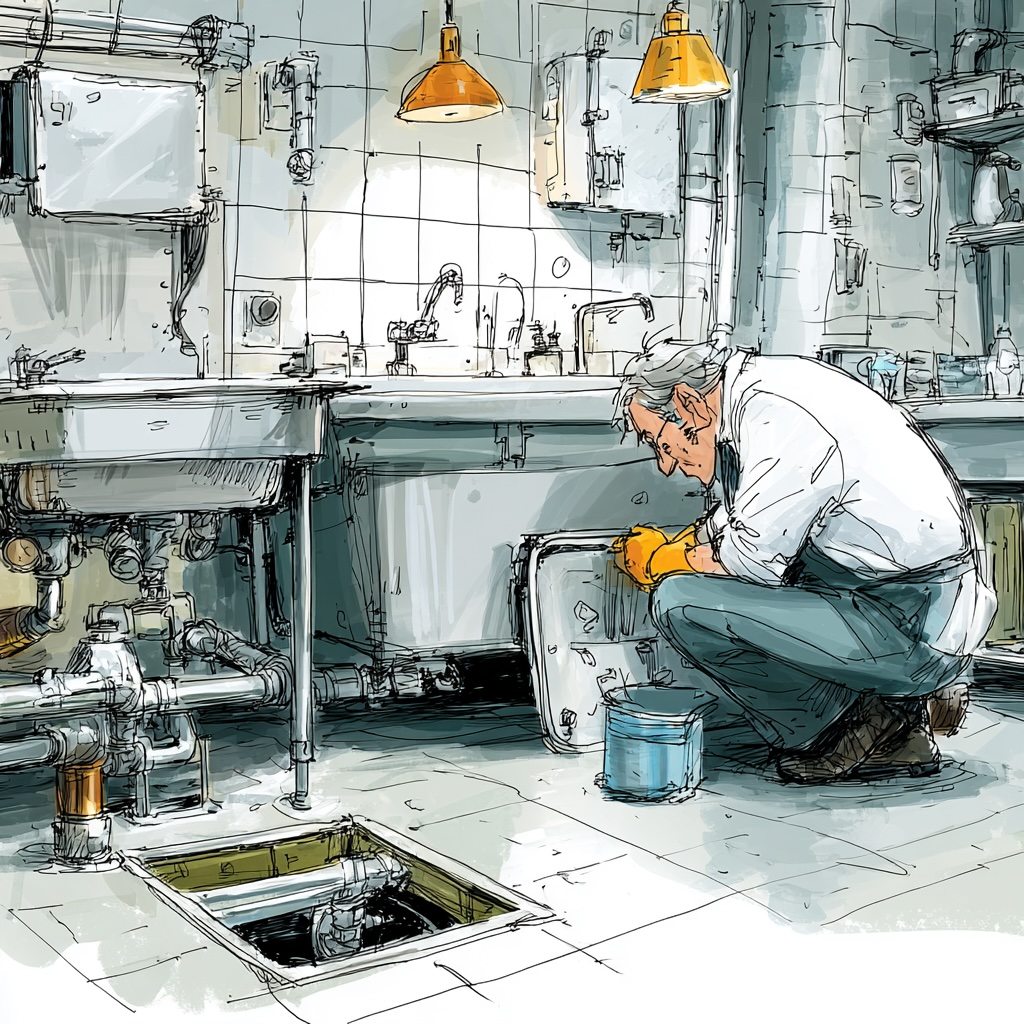
A grease trap, also called a hydromechanical grease interceptor (HGI) in the industry, is a compact point-of-use unit typically installed inside the kitchen, beneath a three-compartment sink, adjacent to a dishwasher, or near another individual fixture that generates grease-laden wastewater. These units are small by design, ranging from roughly 10 to 100 gallons in capacity, and are built to intercept FOG from a single fixture or a small cluster of fixtures before it enters the drain line.
Grease traps are made from durable materials including stainless steel, cast iron, and heavy-duty plastics, and they contain a baffle system that slows the incoming wastewater and creates the separation environment described above. Because they are small, they fill relatively quickly. Point-of-use grease traps in high-volume kitchens can require cleaning weekly or even more frequently, depending on what's being cooked and how much water flows through the fixture they serve. For lower-volume applications, monthly cleaning is more typical.
The practical advantage of a grease trap is its footprint. In Manhattan kitchens where basement access is limited, building structure restricts underground installation, or the space available for any equipment is minimal, a compact under-sink unit may be the only physically feasible option. The trade-off is that a small device requires more frequent service, and if service is delayed, the trap reaches capacity quickly and allows FOG to bypass into the drain line.
Grease traps are generally well suited to smaller restaurants, cafes, bakeries, juice bars, and food preparation operations where grease output is moderate and the number of FOG-generating fixtures is limited. They are also commonly used in operations where a larger interceptor exists downstream but individual point-of-use traps are added for specific high-grease fixtures.
Grease Interceptors
A grease interceptor, often called a gravity grease interceptor, is a much larger system designed to handle high-flow applications where wastewater from multiple kitchen fixtures, including sinks, dishwashers, floor drains, wok stations, and cooking equipment, converges before entering the building's drain line. These units range from approximately 500 gallons to 2,000 gallons or more, and they are typically installed underground, outside the building, or in an accessible below-grade location such as a basement or service area.
Because of their size, gravity grease interceptors require a retention time of roughly 30 minutes to allow full FOG separation before the outlet water exits to the sewer. This is different from a compact grease trap, which works through rapid baffled flow at a point of use. The interceptor's large chamber volume is what provides that retention time even at the high flow rates generated by a busy full-service restaurant or institutional kitchen. They are constructed from concrete, fiberglass, or steel, materials chosen for durability in outdoor or underground installation conditions.
High-volume kitchens in Brooklyn commissaries, hotel food and beverage operations, hospital cafeterias, and full-service restaurants across Queens and Manhattan's busier dining corridors typically use gravity grease interceptors as their primary FOG management system. The size and retention capacity mean these units need to be serviced less frequently than compact traps, generally monthly to quarterly depending on kitchen output, but they require professional vacuum equipment and a licensed hauler to clean properly because of the volume of accumulated waste involved.
One important note for New York City specifically: the NYC Plumbing Code requires that all grease interceptors be installed by a licensed NYC Master Plumber, and the installation must be filed with both the Department of Buildings and the DEP. Undersized interceptors are a frequent source of compliance violations in the city because they were either incorrectly specified at installation or because the kitchen's volume increased significantly after the initial sizing.
How to Determine Which System Your Kitchen Needs
The decision between a grease trap and a grease interceptor comes down to three main factors: your kitchen's flow rate, the number of FOG-generating fixtures you have, and what is physically feasible given your building's layout.
Flow rate is the primary technical driver. The general industry standard, derived from the Uniform Plumbing Code and adopted into local codes including NYC's, is that kitchens with a wastewater flow rate below roughly 50 gallons per minute are candidates for compact grease traps, while kitchens above that threshold require a larger interceptor. In practical terms, a kitchen with a single three-compartment sink and a small dishwasher may be manageable with a point-of-use trap. A full-service restaurant running multiple sinks, a commercial dishwasher, floor drains, wok stations, and prep sinks will almost certainly require an interceptor.
The number of FOG-generating fixtures matters because each fixture generates wastewater that contains some amount of grease. A compact trap positioned under one sink handles that sink's output. It does not handle the dishwasher, the floor drains, or the prep sinks unless they are all plumbed to the same unit, which is typically only feasible at small scale. An interceptor, connected to the building's main drain before it exits to the sewer, captures FOG from all fixtures collectively.
Building constraints are the third factor, and in New York City they carry more weight than in most markets. A kitchen in a ground-floor Manhattan space with limited structural access may have no viable path to underground interceptor installation. In those cases, a combination of indoor point-of-use traps, appropriately sized for each fixture, may be the code-compliant solution, sometimes combined with an automatic grease removal device. Understanding how often your kitchen generates FOG and what volume of waste your plumbing handles is directly relevant to this decision, because volume determines which system is appropriately sized for your operation.
The right answer for your specific kitchen should be assessed by a licensed plumber who can calculate flow rates, review your fixture list, and confirm what the DEP's sizing requirements produce for your specific setup. This is not a decision to make based on what another restaurant down the block has, because kitchen configurations and volumes differ significantly even between similar types of operations.
Maintenance
The physical differences between grease traps and interceptors translate into meaningfully different maintenance patterns. Getting this right is as important as the initial installation, because a correctly chosen but poorly maintained system creates the same compliance exposure as no system at all.
Compact grease traps, because of their smaller capacity, typically reach the 25 percent fill threshold that triggers required cleaning much faster than a large interceptor. A busy kitchen using a point-of-use trap may need service every one to two weeks in some cases, while moderate-volume operations may land in the monthly range. If your trap is filling faster than expected, that is a signal that it may be undersized for your actual fixture output, not a sign that you simply need to schedule more frequent service indefinitely.
Gravity interceptors in high-volume operations typically require monthly professional service, with lower-volume kitchens sometimes managed on a quarterly schedule. The 25 percent rule applies to both: under 15 RCNY Section 19-11, New York City's DEP requires that accumulated FOG and solids in any grease interceptor or automatic grease removal device not exceed 25 percent of the unit's total liquid depth. Both device types are held to this standard, and both require documented cleaning records on-site. Keeping your grease trap documentation in order alongside your used cooking oil disposal records is how a well-run kitchen demonstrates compliance across both FOG streams when an inspector visits.
One consistent piece of guidance we give to every operation we service: do not add enzymes, degreasers, emulsifiers, or chemical additives to your grease trap or interceptor. These products do not eliminate grease. They liquefy or suspend it, which allows it to pass through the trap and into the sewer in exactly the way the device was installed to prevent. The DEP prohibits the use of additives that emulsify grease in interceptors for precisely this reason.
A Note on Terminology in NYC
One source of genuine confusion in New York City is that the terms "grease trap" and "grease interceptor" are sometimes used interchangeably in conversation, in DEP communications, and even in some code documents. The NYC Plumbing Code uses "grease interceptor" as the primary regulatory term for all FOG interception devices, and the DEP's Best Management Practices apply to grease interceptors and automatic grease removal devices collectively.
In practice, when NYC plumbers, inspectors, and service companies refer to a "grease trap," they may be referring to a compact hydromechanical unit, a large gravity system, or the category generally. The underlying mechanics of how grease separation works are the same across all of these devices, which is part of why the terminology blurs in daily use. What matters for your operation is not which term is used, but that you know what physical system you have, whether it is appropriately sized, and whether it is being serviced on a compliant schedule.
Both Systems Require the Same Commitment
Whether your kitchen runs a compact point-of-use grease trap under a sink or a 1,500-gallon underground interceptor in the basement, the compliance obligations are the same: proper installation, regular cleaning, documented service records, and removal by a licensed hauler. The size and configuration differ. The regulatory accountability does not.
At Bio Energy NYC, we provide professional grease trap cleaning for food service operations across Manhattan, Brooklyn, and Queens, and we handle used cooking oil collection to keep both sides of your FOG program fully documented and compliant. When you're ready to get your grease management on a reliable schedule, contact us or request your free pickup and we will take care of the rest.
Bio Energy Development is a BIC-licensed, DEC-permitted used cooking oil collection and grease trap cleaning company serving Manhattan, Brooklyn, and Queens. BIC Lic. #TW3525 | DEC Permit #1A-1149 | EPA ID #NYR000170753.