Cooking Oil to Biodiesel: How Used Oil Becomes Clean Fuel
Every week, fryers across New York City's restaurants, hotels, commissaries, and commercial kitchens produce millions of gallons of used cooking oil. Most operators know it needs to be collected, stored correctly, and removed by a licensed hauler. What fewer people have thought through in any detail is where the oil actually goes after it leaves the kitchen, and what it becomes. The answer is more interesting than most operators expect.
We've been part of this supply chain for over 15 years, collecting used cooking oil from food service operations across Manhattan, Brooklyn, and Queens and moving it into the recycling pipeline. In this article, we want to walk you through the full journey from fryer to fuel: the chemistry involved, the steps of commercial production, and how New York City's own buildings are being heated by oil that originated in local restaurant kitchens.
Why Used Cooking Oil Works as a Fuel Feedstock
To understand why cooking oil converts so well into biodiesel, it helps to understand what cooking oil actually is at a molecular level. Fats and oils are built from triglycerides, molecules that consist of three fatty acid chains attached to a glycerol backbone. That molecular structure contains a significant amount of stored chemical energy, which is exactly what makes it useful as a fuel precursor.
When oil is used for frying, heat and repeated exposure to food particles, water, and oxygen begin breaking those triglyceride molecules down. Some of the fatty acid chains separate from the glycerol backbone, becoming what are called free fatty acids (FFAs). The degree to which this has happened determines how the oil behaves during processing. Yellow grease, which is used cooking oil from restaurant fryers with a free fatty acid content below about 15 percent, is the feedstock best suited to efficient biodiesel production. Brown grease, which comes from grease traps and has much higher FFA content, requires different handling and is not the same material. Understanding the difference between these two waste streams is foundational to understanding how the recycling pipeline works.
The key advantage of used cooking oil as a biodiesel feedstock, compared to virgin vegetable oils, is that it is already a byproduct of another process. No additional land, water, or agricultural inputs are required to produce it. It replenishes itself continuously wherever food is being cooked, which makes it one of the most genuinely circular feedstocks in the renewable energy system.
Stage One: Collection and Quality Control
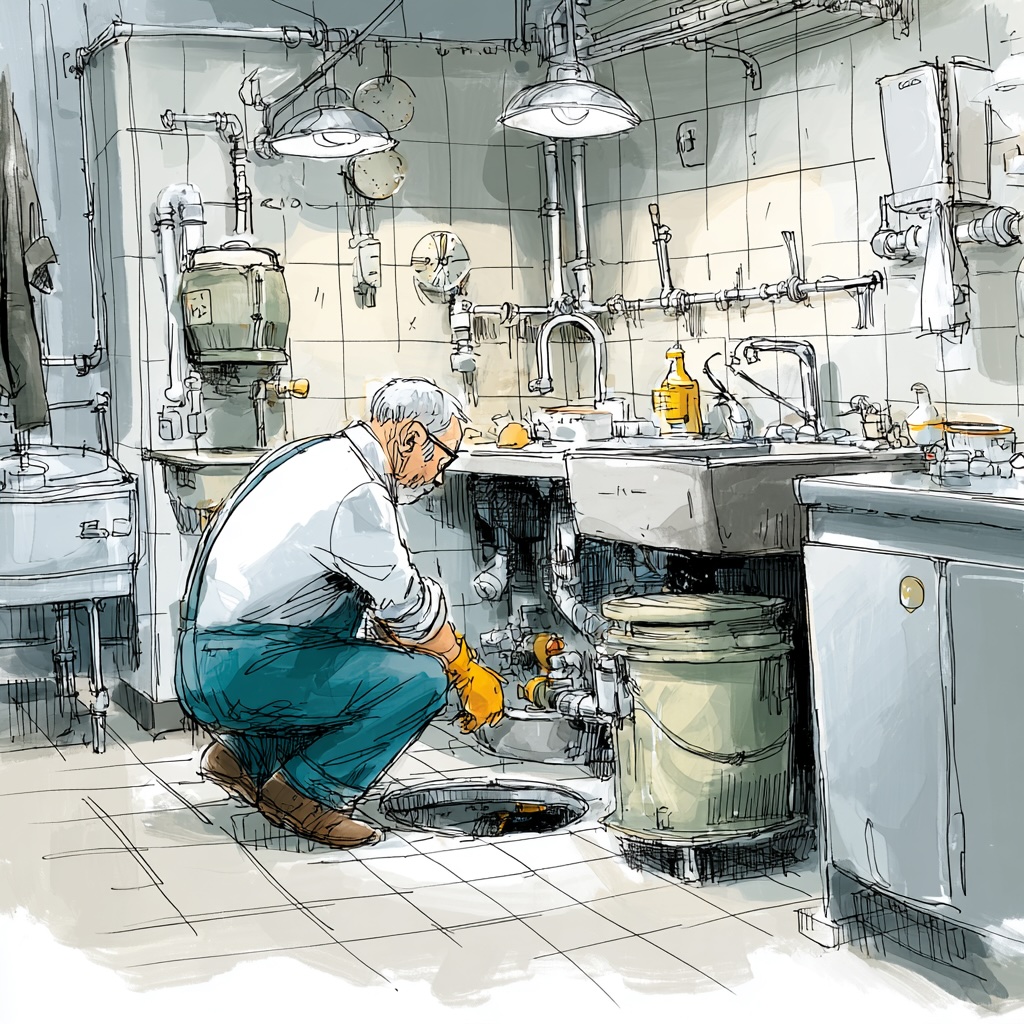
The first stage of the cooking oil to biodiesel pipeline is collection, which is what we handle directly. The oil produced in your kitchen is stored in a sealed, licensed container until a BIC-licensed hauler arrives to pump it out. From there, it travels to an aggregation or pre-processing facility where the first quality checks occur.
At this stage, technicians assess the oil's free fatty acid content and the level of contamination present. Cooking oil that has been properly stored in a sealed, labeled container and kept separate from water, cleaning chemicals, and grease trap waste arrives in significantly better condition than improperly handled material. This is why how you store your used cooking oil before pickup has a direct effect on the downstream usability of what your kitchen produces. Contaminated or degraded oil requires more intensive pretreatment, which adds steps to the process. Oil that arrives in clean, well-managed condition moves through the pipeline more efficiently.
The collected oil is typically filtered at this stage to remove food particles, breadcrumbs, water, and sediment before it moves to the refinery. Mechanical filtration separates solid particles down to very small sizes. Any residual moisture is driven off through heating, because water in the feedstock interferes with the chemical reaction that follows.
Stage Two: Pretreatment and Free Fatty Acid Management
Before the main conversion reaction can happen, the oil must be pretreated to manage its free fatty acid content. This is the step that most general-audience articles skip over, and it's worth understanding because it explains why feedstock quality matters so much.
In the standard industrial biodiesel production process, triglycerides are converted using an alkali catalyst, typically sodium hydroxide or potassium hydroxide dissolved in methanol. This works well when the oil's FFA content is low, generally below about two to four percent. The problem is that free fatty acids react with the alkali catalyst to form soap rather than biodiesel. Soap formation wastes catalyst, produces byproducts that are difficult to separate, and reduces yield. Used cooking oil from restaurants typically has higher FFA content than virgin oil precisely because heat and repeated use have broken down more of the triglycerides.
To handle this, commercial processors use a pretreatment step called acid-catalyzed esterification. The oil is first mixed with a small amount of an acid catalyst, commonly sulfuric acid, along with methanol and heated. This converts the free fatty acids into fatty acid methyl esters, which are themselves a form of biodiesel, without generating soap. Once the FFA content has been brought down to an acceptable level, the oil can proceed to the main transesterification reaction. This two-step approach is standard practice for used cooking oil feedstock and produces high-quality biodiesel that meets ASTM fuel specifications.
Stage Three: Transesterification and What It Produces
Transesterification is the central chemical reaction that turns cooking oil into biodiesel. The name describes what's happening at the molecular level: the ester bonds in the triglycerides are replaced, or trans-esterified, by a reaction with a short-chain alcohol, almost always methanol, in the presence of an alkali catalyst.
In industrial practice, the pretreated oil is mixed with methanol and the catalyst, then heated and agitated in large reactor vessels. The reaction proceeds continuously over a defined period and temperature range. As the reaction completes, two distinct layers form. The upper layer is biodiesel, technically a mixture of fatty acid methyl esters (FAME). The lower layer is glycerin, which carries the separated glycerol backbones from the original triglycerides along with the catalyst, water, and soap residues.
The two layers are separated and each is processed further. The biodiesel layer is washed to remove residual catalyst, soap, and methanol, then dried to remove water. The finished biodiesel is tested against ASTM D6751, the standard specification for biodiesel fuel blend stock, to confirm it meets purity and performance requirements. The glycerin layer, called crude glycerin, is refined and sold into its own market. Refined glycerin is used in pharmaceuticals, personal care products, food applications, and industrial processes. What recycled cooking oil gets turned into is actually a broader picture than just fuel, and glycerin is one of the most commercially significant co-products of the whole process.
The approximate ratio is worth understanding: roughly 100 pounds of oil reacted with about 10 pounds of methanol produces approximately 100 pounds of biodiesel and 10 pounds of glycerin. The methanol is partially recovered and recycled within the production process. This is an efficient conversion with very little waste when the feedstock is properly prepared.
NYC's Heating Oil Pipeline
Once certified biodiesel is produced, it typically enters the fuel blending and distribution system. In New York City and New York State, there is a direct and legally mandated pathway for that biodiesel: it must be blended into all heating oil sold in the state. As of July 2025, New York State requires a minimum of 10 percent biodiesel in all heating oil (B10), with requirements increasing to 20 percent by 2030. NYC established its own Bioheat mandate earlier, and has been progressively raising minimum blend requirements since 2012.
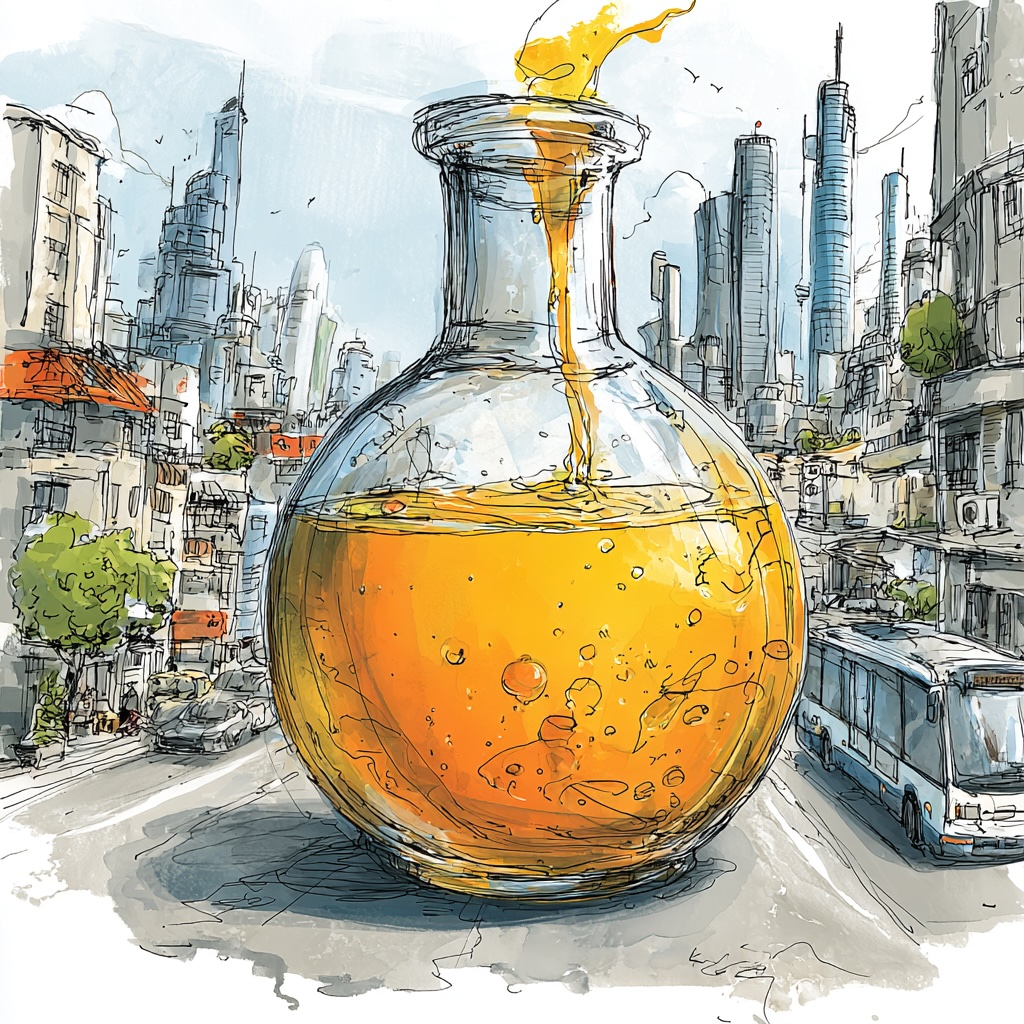
This means the biodiesel produced from restaurant cooking oil in the greater New York area flows directly into the fuel supply that heats homes and buildings across the city. A restaurant on a Tuesday night service in Flushing or the West Village is producing cooking oil that will, within weeks, help heat an apartment building in Brooklyn or a co-op on the Upper West Side. That is not a hypothetical. It is how the supply chain actually works in the Northeast.
The Bioheat blending requirement was designed specifically to create this kind of local circular economy: urban food waste streams feeding urban energy infrastructure. From a compliance and sustainability standpoint, it also explains why keeping up with NYC's used cooking oil disposal regulations matters beyond just avoiding fines. Each properly collected gallon of yellow grease is a direct input to the city's mandated clean energy transition.
Knowing how often your kitchen generates oil and maintaining a consistent collection schedule is what keeps your operation's contribution to this pipeline reliable. Irregular or infrequent collection means oil sitting in storage longer, degrading further, and producing feedstock that is harder to process. Consistent pickup on a schedule matched to your volume is the operational foundation that makes everything downstream work well.
Conclusion: Your Kitchen Is Part of a Fuel Supply Chain
The journey from fryer to fuel is a genuinely elegant example of how urban waste streams can be transformed into urban energy resources. The cooking oil your kitchen produces is not a disposal problem. It is a feedstock in a production process that, in New York City, runs directly from restaurant service into the heating systems of the buildings around you.
At Bio Energy NYC, we are the link between your kitchen and that pipeline. Every gallon we collect through our used cooking oil collection and disposal service enters a recycling chain that ends in cleaner fuel for New York. If you would also like to get your grease trap on a compliant maintenance schedule, our grease trap cleaning program covers both sides of your FOG management. When you're ready to get started, contact us or request your free pickup and we will handle the rest.
Bio Energy Development is a BIC-licensed, DEC-permitted used cooking oil collection and grease trap cleaning company serving Manhattan, Brooklyn, and Queens. BIC Lic. #TW3525 | DEC Permit #1A-1149 | EPA ID #NYR000170753.